VERA · for laboratories
VERA™ for the lab
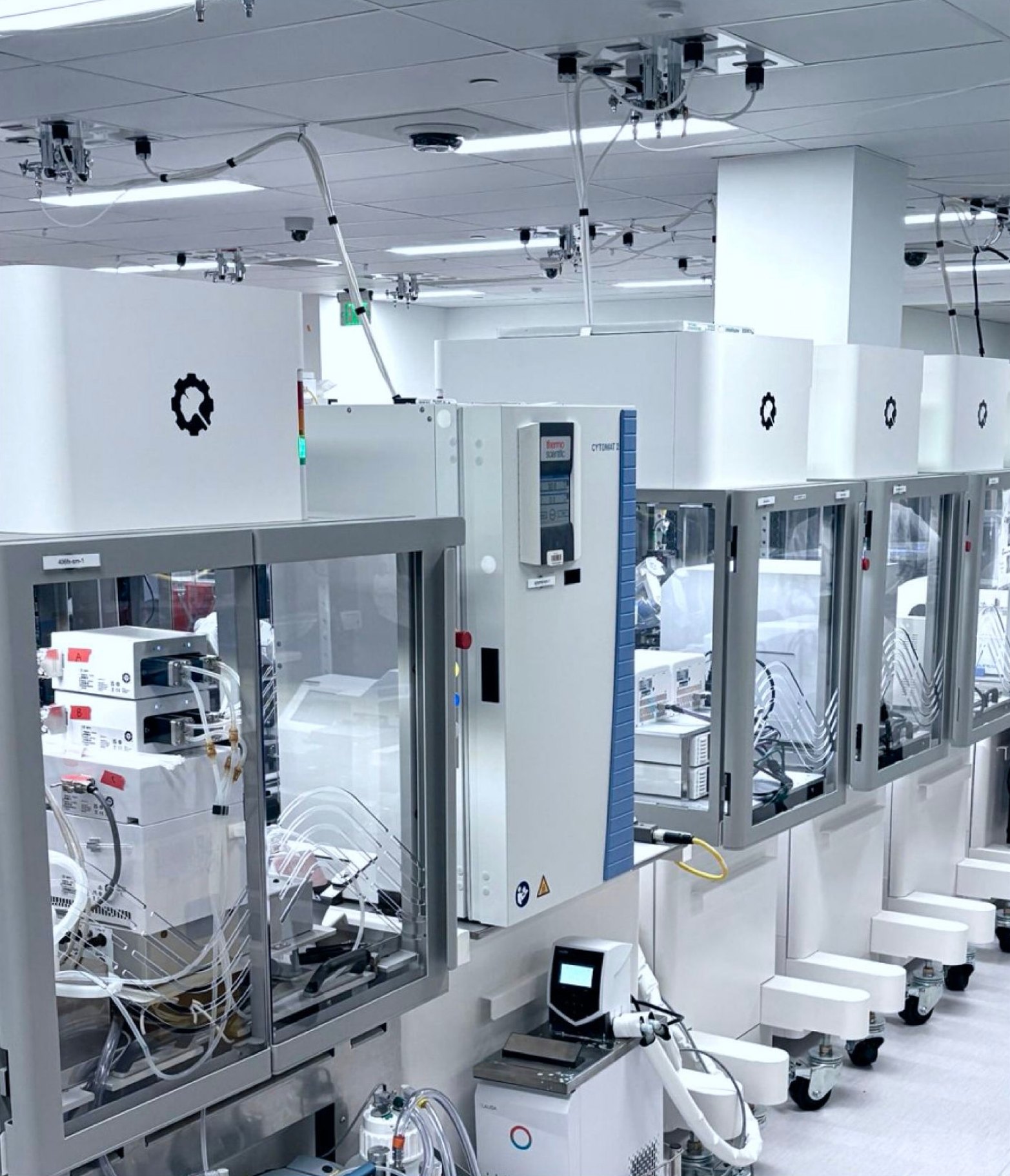
Run a sample through the lab yourself. Pick an instrument, receive a tube and bring its file: VERA's own code seals it, checks it on the way, chains its custody log, runs the gate, builds what the person's knowledge graph would hold and decides whether it may reach the person's twin. Every step runs on what you do here; where the lab uses hardware, the step says what happens there.
- 0/11Stations your run has passed
- –Bytes sealed at the edge
- 0Entries in its custody log
- –Results through the gate
- –Facts for the knowledge graph
Laboratory directors
Bioinformaticians
QA
IT and security
Your run: It lives in this browser tab. Each step sends its values to VERA on this server, which works out the answer and keeps nothing. The run is gone when you close the page. The people and files are made up for this demonstration.
End to end · stations 01–11
Your sample's path, station by station
Your run starts at the lab floor: pick an instrument and receive a tube in 1. Roche cobas pure c 303 + e 402 is picked.
- 01 · zone 1Sample arrives at the lab To come
- 02 · zone 1Sample prep To come
- 03 · zone 1The Axiom panel To come
- 04 · zone 2VERA Edge on NVIDIA DGX Spark captures the raw signal To come
- 05 · zone 3ANYsec link encryption To come
- 06 · zone 3Routed to on-prem storage by default To come
- 07 · zone 4Custody: three systems, one record To come
- 08 · zone 4Independent analysis on the raw data To come
- 09 · zone 5Knowledge graph and model network To come
- 10 · zone 6The patient's digital twin To come
- 11 · zone 6Two routes from the twin To come
The sample is still a physical specimen
Lab floor
Stations 01 and 02 · receive a tube
Receive a tube
Type the barcode on the tube and the one on its label, and pick what is in it: IRENA's tube label (such as IRN261112011, as Run a sample prints it) or an edge specimen code. VERA's capture rule checks the barcode's form, and its identity check makes sure tube and label agree before anything is measured.
Press “Receive the tube”. Try a barcode with a capital letter, or a label that differs from the tube.
Station 03 · the instrument
Which instrument measures it?
Pick an instrument of the Axiom panel: 10 AXIOM panel instruments in 8 families; 9 have an edge lane, and 9 of those are active in IRENA's register. The 9 with an edge lane are listed here. Its card is read from the asset register and its instrument profile: what it writes and how the edge opens it. The edge seals the files of an instrument that is active in the register, and of no other.
Roche cobas pure c 303 + e 402
Roche cobas e 402 and cobas c 303, Clinical Pathology
Active in the register: the edge will seal its files.
- What it writes
- HL7 ORU
- What the edge opens it into
- HL7 v2 ORU messages, FHIR DiagnosticReport/Observation projection
- Edge computer
- SPARK-06
- In the asset register
- Active
- Its profile
- Needs vendor interface package
- How VERA talks to it
- Vendor runtime
- Lane that reads its results
- Blood chemistry
- Analysis it feeds
- Roche cobas pure clinical chemistry and immunoassay
- Asset number
- CP-CP-000001
On the Spark. The instrument measures the tube and writes its own file. On this page, in 2, you bring the file yourself or use this instrument's demo file.
Try it · quality control
Are the analyser's controls in control?
Before any patient result counts, the analyser measures control samples with known targets. Type the targets and the control values of each run; VERA's Westgard rules judge each run with the runs before it. On the Spark the targets are the ones the laboratory director signs; here you type the targets.
- Run 1
- Run 2
- Run 3
- Run 4
- Run 5
Press “Judge the runs” to run the rules on these values.
The sample becomes data
Instrument edge
Station 04 · the edge computer
Seal the instrument's file
The file the instrument wrote is sealed before it leaves the room: a SHA-256 fingerprint of its exact bytes, signed with the edge computer's key. Use this instrument's demo file, or drop a file of your own. The fingerprint and the signature are computed now, in your browser.
Its file
Stage 1 plugin for this lane: VERA clinical observation normaliser, admitted, runs on the Spark.
Pick a file, then seal it.
On the Spark. The edge computer beside the instrument seals the file the instrument writes, and the lane's Stage 1 plugin reads it there. On this page your browser holds the edge key and seals the file.
Evidence leaves the bench, encrypted
Secure transit
Station 05 · secure transit
Send it to the core, and check it arrived as sealed
The edge and the core each hold a key; together they agree on a session key, and the file travels encrypted with it. At the core, VERA opens it, recomputes the fingerprint and checks the edge's signature. Tick the box to change one byte on the way and watch the core refuse it.
Seal a file in 2 first.
Nothing sent yet.
On the Spark. The Nokia ANYsec link encrypts every frame between the rooms and both ends prove who they are with certificates. On this page both keys live in your browser; the checks above the link are the same.
Station 06 · routing
Where may this evidence go?
Every kind of evidence has a routing rule. Pick what you are moving and where to; VERA's routing rule decides, and says why.
Try a secure cloud for native evidence, then for a pseudonymised subset with and without a legal assessment.
Three custody systems, one independent analysis
Custody and analysis
Station 07 · custody and the gate
The custody log, chained, and the five checks
Every step of your run went into a custody log. VERA chains it with the laboratory's own hash chain: each entry carries the hash of the one before. Change an entry afterwards and VERA finds where. Then the gate runs its five checks on the file that arrived.
Custody log of your run
Empty: receive a tube in 1 to start your run.
The five checks on the file that arrived
The gate reads only a file the core accepted: send one in 3 first.
Station 08 · analysis
The analysis Roche cobas pure c 303 + e 402's files feed
Read from the reference stacks: the stages and the pinned tools of Roche cobas pure clinical chemistry and immunoassay, and the release gates its own results must pass.
- 01Host result, QC and calibration captureRoche cobas pure host-interface adapter
- 02Code, unit and reference normalisationVERA clinical observation normaliser
- 03Clinical evidence packaging and releaseVERA clinical lab evidence packager
Its release gates, all blocking: Source message integrity; QC calibration; Code unit mapping; Reference provenance; Independent review.
On the Spark. The pinned tools run on the person's file in locked containers on the Spark, and their own release gates are checked there.
Pseudonymised, not anonymised
Intelligence layer
Station 09 · the knowledge graph
What the person's knowledge graph would hold
Each result the gate let through becomes a fact: tied to whose sample it is, to the run, and to a code the knowledge graph knows. VERA's fact adapter builds each one, checks it against the fact contract, and applies the graph's fail-closed rules. A fact that does not fit is refused, never guessed.
Run the gate in 4 first.
No facts yet.
On the Spark. Facts go into the person's own encrypted graph on the node and link to the reference graph there. This page shows what would be written, and stores nothing.
Try it · the person's own range
The standard range, and the person's own
Pick a test and type the person's results, the newest last. VERA prints the standard range a report carries, then learns the person's own range from their earlier results and reads the newest against it. The standard range shown here is the sample run's; the laboratory's own ranges await sign-off.
Glucose (fasting) in mg/dL; the standard range for the sex picked above is 70–99 mg/dL.
- mg/dL
- mg/dL
- mg/dL
- mg/dL
- mg/dL
Press “Read the newest result” to run it on these values.
The evidence comes back to the person it describes
The patient
Station 10 · release
May your run reach the person's twin?
VERA's release gates read your run as you made it: was the file sealed, did it arrive as sealed, did it pass the gate, are there facts to send, and does the register list an open blocker for the instrument.
Start a run in 1 first; you can check it at any step.
Not checked yet.
On the Spark. The gates that need people run at release on the Spark: a reviewer who did not submit the run signs, and every clinical result is reviewed one by one.
Try it · what if something went wrong?
Could a sequencing run reach the person's twin?
Describe a genome sequencing run and what went wrong, if anything. VERA's release gates, the ones the release step enforces, judge it on the spot. The gates that need a signed-in reviewer are checked at release on the Spark.
Flip a switch or press “Check the run”.
Station 11 · research models
The person's cells, for research only
Organoid and printed-tissue models of the person's cells are for research only, never a treatment. A record goes to the organoid lab only after its run is released and only for the uses the person consented to.
A record goes to the organoid lab only after its run is released (10).
Planned: the organoid lab grows the person's cells and the printers build tissue models.
Formats and contracts
Your file's format, and a record against the contract
Roche cobas pure c 303 + e 402: from its own file to the analysis
- What it writes (station 04)
- HL7 ORU
- Open formats the edge makes
- HL7 v2 ORU messages, FHIR DiagnosticReport/Observation projection
- VERA's own replay (station 08)
- HL7 v2 ORU messages, FHIR DiagnosticReport/Observation projection
- What the analysis reads
- Roche host result message, Roche QC calibration export, Assay method lot metadata
Your run's file
Pick or drop a file in 2.
Check a record against the knowledge-graph contract
Paste a fact record, or start from the example and break it: VERA checks it against its fact contract and says what is wrong in words.
Nothing checked yet. Try deleting the line that says whose sample it is, or giving its kind a value the contract does not know.
Gates and controls · stations 04–10
Every control between the tube and the twin, against your run
Against your run: 0 passed, 0 stopped it, 34 to come or checked on the Spark, of 34 controls.
Station 04
At the edge
If one fails: Refused or held, and no fact is written.
- Seal only active instrumentsAn instrument that is not active in the register, or blocked in its profile, is never sealed. To come
- No plugin on a blocked analysisA Stage 1 plugin whose reference analysis is blocked is not admitted. To come
- Stage 1 needs an admitted pluginWithout an admitted plugin for its lane, Stage 1 does not run. To come
- Plugin output must fit the fact contractAn unknown kind, status or code list, or a fingerprint mismatch, holds the capture and writes no fact. Runs on the Spark
- Held captures stay heldA held capture cannot go on until quality review clears it. To come
Station 05
Above the encrypted link
If one fails: A file that does not arrive as sealed is refused and stays in the edge's spool.
- Mutual TLS between Edge and CoreBoth ends prove who they are before any evidence moves. Runs on the Spark
- Signed, hashed evidence bundlesThe receiver recomputes the digest; a mismatch is refused. To come
- Encrypted local spoolSelf-encrypting storage on the Edge holds batches if the link drops. Runs on the Spark
- Cryptographic receiptsEach transfer records the algorithm, key ID and certificate chain used. To come
Station 07
The ingest gate's five checks
If one fails: The file is quarantined with a reason, and nothing from it goes on.
- Complete and readableEvery field VERA needs is there, no character is garbled and no identifier is cut short. To come
- UnitsEvery value has a unit VERA knows, fits its test, and is converted only through the laboratory's agreed conversion table. To come
- Known codesEvery test, microbe and gene code is one VERA can look up, so nothing is guessed. To come
- Possible valuesEvery value is one a living body can have, and its high or low flag agrees with the value and its range. To come
- Nothing missing or repeatedNo result twice, every test the panel promises is there, and a genome file says which parts it covered. To come
Station 08
The analysis's own release gates: Roche cobas pure clinical chemistry and immunoassay
If one fails: Every one blocks: the analysis result is not released.
- Source message integrity Runs on the Spark
- QC calibration Runs on the Spark
- Code unit mapping Runs on the Spark
- Reference provenance Runs on the Spark
- Independent review Runs on the Spark
Station 09
The knowledge graph's fail-closed rules
If one fails: The fact is refused or quarantined, never guessed.
- Unknown identity To come
- Unpinned reference release To come
- Caller disagreement To come
- Critical value unsigned To come
- Unadmitted software digest To come
- Nanopore clock without transform To come
- Protein value without reference frame To come
- Protein QC failed To come
- Protein configuration not admitted To come
- Instrument concordance not passed To come
Station 10
The twin's release gates
If one fails: Quarantine with a visible reason; nothing is written to the person's twin.
- IdentityOrder, person, sample, aliquot and run all agree. To come
- CompletenessEvery file the instrument must write, and its reviewed context, is there. To come
- Analytical quality controlThe instrument's and the analysis's quality checks pass, and the callers agree. Runs on the Spark
- Every value understoodEvery value is tied to a known code and unit; nothing is guessed. To come
- ReleaseAn authorised reviewer signs the release. To come