VERA EdgeDGX Spark onboard libraryStage 1 docked
Sample journey

Your visit seen only by you, kept for 30 minutes after your last action

VERA Edge · operating manual

How the system works

One page, five tabs. The tour seals real bytes in your own visit and shows the facts the server bound. The NVIDIA and Gauss packs are the integrator and LIM upgrade specifications.
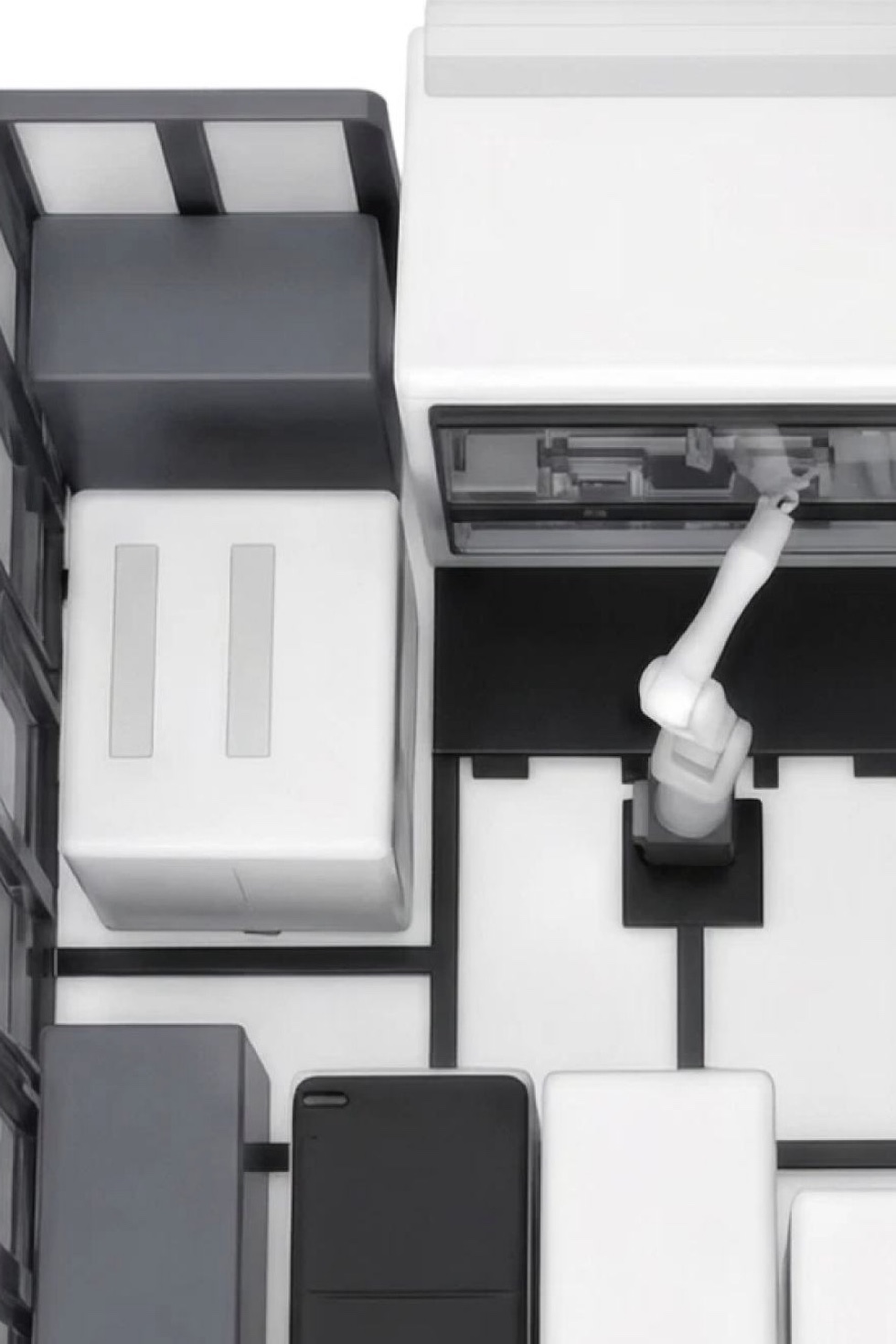
Top-down view of a white modular automation cell with robot arm

Five minutes · this app

Status: Tour runs in your visit

Run one native file through VERA Edge

  1. 1. The edge node is a separate computer beside the analyser

    Receive vendor-supported host messages through a mutually authenticated interface and retain the original byte stream plus acknowledgements.

    1. Roche cobas pure c 303 / e 402
    2. HL7 ORU on its export share
    3. VERA Edge reads, never writes back

    VERA Edge only reads. It never sends a command to the instrument.

  2. 2. The LIMS names the tube first

  3. 3. Seal the native bytes

  4. 4. Stage 1 plugin

  5. 5. The facts are written; interpretation waits for the cohort

VERA Edge · system

Key statement

VERA Edge is a computer fixed to a diagnostic instrument. The instrument keeps doing what its maker certified. The edge computer reads the instrument's own file, records its fingerprint, runs one fixed version of the analysis software, and writes results in the form the Prepaire knowledge graph already uses. The analyser keeps working as its maker certified it; VERA Edge only reads its output.

Four planes

  1. 1. LIMS: people and tubes. Orders, accession, the specimen‑to‑subject mapping, cancellation. It runs apart from the Spark.

  2. 2. BioSafe: may this tube touch this deck. Fail‑closed custody, starting at collection and receipt.

  3. 3. VERA Edge / Spark: the files leaving the machine. A computer beside the instrument that only reads them.

  4. 4. Super Model: interpretation after eight released cards. Research.

Why third-party software is docked

Stage 1 runs NVIDIA Parabricks deepvariant_germline, Dorado + EPI2ME wf‑human‑variation, MetaPhlAn and VERA clinical observation normaliser, each approved by its fingerprint. The maker's own software stays on the instrument, and its result is kept unchanged, to compare against and as the regulatory record. VERA's result and the maker's are never averaged; the difference between them is kept as a quality check. When Cohort 50 is complete, Stage 1 may step aside and Prepaire's model reads the same sealed files.

Identity on the node

Data on the edge is pseudonymised, not anonymised. The node holds specimen tokens and, when the LIMS supplies one, a pseudonymous subject token. The twin re‑links evidence through that stable token; re‑identification is possible only inside the LIMS identity boundary.

PREPAIRE-VERA-EDGE-NVIDIA@1.0

Status: Prototype build specification

Prototype on DGX Spark

One GB10 module per analyser once a node qualifies. Enclosure 210 × 110 mm (concept). Module 150 × 150 × 50.5 mm, 1.2 kg. 128 GB unified LPDDR5x. Up to 1 PFLOP FP4. 240 W isolated brick. 10 GbE uplink on VERA Core only. ConnectX-7 stays off the instrument LAN. This is a prototype build specification, not a clinical validation package.

Bill of materials (one node)

  • Compute

    Spec
    NVIDIA DGX Spark
    Notes
    GB10, 20-core Arm (10× X925 + 10× A725), Blackwell GPU
  • AI performance

    Spec
    Up to 1 PFLOP FP4 / 1,000 TOPS
    Notes
    Theoretical FP4 with sparsity
  • Memory

    Spec
    128 GB LPDDR5x unified, 273 GB/s
    Notes
    CPU and GPU share one map via NVLink-C2C
  • Storage

    Spec
    1 TB or 4 TB self-encrypting NVMe
    Notes
    Prefer 4 TB on sequencers
  • Enclosure

    Spec
    VERA Edge shell 210 × 110 mm
    Notes
    Prepaire concept housing
  • Power

    Spec
    240 W brick · GB10 TDP 140 W
    Notes
    Isolated from the analyser PSU
  • Lab Ethernet

    Spec
    1× 10 GbE RJ-45
    Notes
    VERA UPLINK only
  • Cluster NIC

    Spec
    ConnectX-7 200 Gbps, 2× QSFP
    Notes
    VERA Core zone only
  • OS

    Spec
    NVIDIA DGX OS
    Notes
    Host for the signed VERA Edge image

Proposed node map (Axiom panel)

Status: Identity from the registry
  • Roche cobas i 601

    Asset · serial
    CP‑CPMS‑000001 · ••••••••03
    Native
    Host result
    Node
    SPARK-05 · Proposed
  • Roche cobas pure c 303 / e 402

    Asset · serial
    CP‑CP‑000001 · ••••••••06
    Native
    HL7 ORU
    Node
    SPARK-06 · Proposed
  • Oxford Nanopore PromethION 48

    Asset · serial
    SR‑P‑000001 · •••04
    Native
    POD5
    Node
    SPARK-03 · Paired with the PromethION 48
  • MGI DNBSEQ-T20x2RS

    Asset · serial
    SR‑GSDTR‑000001 · ••••••••04
    Native
    CAL
    Node
    SPARK-02 · Proposed
  • Sysmex UC-3500 (urine chemistry)

    Asset · serial
    CP‑SU‑000001 · •••85
    Native
    ASTM result + flags
    Node
    SPARK-09 · Proposed
  • Sysmex UF-5000 (urine particles)

    Asset · serial
    CP‑SU‑000002 · •••82
    Native
    ASTM result + flags
    Node
    SPARK-09 · Proposed
  • Sysmex UD-10 (urine particle imaging)

    Asset · serial
    SU‑000001 · •••44
    Native
    ASTM result + flags
    Node
    SPARK-09 · Proposed
  • Element AVITI24 710-00975

    Asset · serial
    SR‑ASRS‑000001 · ••••••03
    Native
    Bases
    Node
    SPARK-01 · Proposed
  • Sysmex XR-1000

    Asset · serial
    SRA‑SXA‑000001 · •••03
    Native
    ASTM result + flags
    Node
    SPARK-08 · Proposed

The earlier deck named four first nodes (AVITI24, DNBSEQ‑T20, PromethION 48, PacBio Revio). The workbook contains seven instrument rows. PacBio Revio and Sysmex XR‑1000 were added by owner confirmation. One VERA Edge node per instrument is proposed, beyond any node already recorded as paired with an instrument. An NVIDIA DGX Spark is installed on site beside the Oxford Nanopore PromethION 48 as the VERA Edge read‑only sidecar. Physical one‑to‑one Sparks are approved only after qualification (DEC‑V3‑004).

Software on the Spark

  • NVIDIA DGX OS, current signed image. Record the GB10 identity into the trust kernel at seat time.
  • Admit only digest-pinned containers. Arm64 compatibility is an admission gate; no arm64 build means the job runs on an x86 Core node.
  • Specimen tokens only (spec-edta-2). No names.

Plugin contract

GET  /v1/health  -> { ok, lane, digest }
POST /v1/run     header x-vera-digest: <digest>
     body        { captureId, instrumentId, specimen, sha, digest }
     response    { digest?, facts: [{ kind, bind, value, status }] }

Identities must already exist in PREPAIRE-KG-SCHEMA@1.7.0 (cpic.diplotype:…, pgscatalog:…, spdi:…, prepaire:…, ncbitaxon:…, chebi:…, loinc:…). Validation comparators from the reference stacks (BWA-MEM2, DeepVariant, GATK HaplotypeCaller, NVIDIA Parabricks ont_germline, Clair3 and Sniffles2, Kraken2 and Bracken, minfi and OpenMS) stay comparators only, and vendor results are kept as the regulatory record.

Environment on the node (read at every run)

VERA_PLUGIN_WGS_URL=http://plugin-wgs:8088   # NVIDIA Parabricks deepvariant_germline
VERA_PLUGIN_ONT_URL=http://plugin-ont:8088   # Dorado + EPI2ME wf-human-variation
VERA_PLUGIN_SHOTGUN_URL=http://plugin-shotgun:8088   # MetaPhlAn
VERA_PLUGIN_METHYL_URL=http://plugin-methylation:8088   # SeSAMe
VERA_PLUGIN_CHEM_URL=http://plugin-chemistry:8088   # VERA clinical observation normaliser
VERA_PLUGIN_MS_URL=http://plugin-organic-acid:8088   # MZmine 4

Commission (one afternoon per instrument)

  1. Confirm the nameplate serial against PREPAIRE-IRENA-ASSET-REGISTRY@3.0.0.
  2. Fit the external bracket. Do not open the analyser.
  3. Seat the Spark. Record the GB10 module identity.
  4. Point DATA IN at the instrument export share only.
  5. Connect the 10 GbE uplink to VERA Core, never the instrument LAN. Leave QSFP on that zone.
  6. Power from the isolated 240 W feed. Confirm PWR / LNK / DATA / SEC.
  7. Boot DGX OS, load the signed VERA Edge image, admit plugin digests.
  8. Run a physical control (NIST / Zymo / vendor QC) before any Cohort 50 sample.
  9. Seal one native run, confirm the SHA-256, run Stage 1, inspect the bound facts.

What the prototype asks of NVIDIA

A request, not an agreement

  • GB10 modules and DGX OS support on the bench.
  • A Parabricks 4.7 path on Arm64 / GB10.
  • Guidance on ConnectX-7 pairing when two Sparks share a large WGS job.
  • Confirmation that 140 W TDP plus enclosure cooling stays inside 5–30 °C at IRENA.

Where the prototype sits in the laboratory

  • Read-only on the instrument.
  • The LIMS keeps accession.
  • Pseudonymised tokens.
  • Local validation per instrument.
  • BioSafe keeps custody.
  • Patient activation needs the laboratory's authorisation.
PREPAIRE-VERA-EDGE-GAUSS@1.0

Status: Upgrade specification

Upgrade the LIM Ingestor 3.0

For Gauss (LIM and LIM Ingestor engineering). Do not replace the LIM. Promote it. The LIM keeps accession. BioSafe keeps custody. The edge becomes the producer of the native seal. Ingestor 3.0 becomes the witness that the hash matches.

  • Orders, accession, patient-to-specimen, cancel

    Stays with
    LIM
    Moves to VERA Edge
    —
  • Physical custody transitions

    Stays with
    BioSafe authorisation layer
    Moves to VERA Edge
    Witness only
  • Native evidence seal, SHA-256, quarantine

    Stays with
    LIM Ingestor 3.0
    Moves to VERA Edge
    Onboard Spark node
  • Digest-pinned secondary analysis

    Stays with
    Planned / vendor boxes
    Moves to VERA Edge
    Stage 1 plugins
  • KG fact bind

    Stays with
    Planned release
    Moves to VERA Edge
    Onboard bind, Core uplink
  • Interpretation

    Stays with
    Third-party (docked)
    Moves to VERA Edge
    Super Model after Cohort 50

Universal extraction procedure (unchanged)

  1. Match the physical serial to the governed registry.
  2. Create a LIM run identity; bind samples, aliquots, plates, reagents, operator, method, instrument.
  3. Collect the highest-fidelity native evidence. Never substitute a vendor report.
  4. Seal the source bundle. Independently verify the SHA-256.
  5. Reconcile files, bytes, identifiers, timestamps, controls, flags.
  6. Create open derivatives only with admitted, digest-pinned builds.
  7. Normalise without destroying source value, unit, range, method or flags.
  8. Quarantine any failed gate. QA releases the bundle to the KG.

The edge executes steps 3 to 8 next to the instrument, then posts a receipt to the LIM.

Receipt the LIM must persist

No capture in your visit yet. Seal one on the Capture page to see its receipt here.

  • The LIM run identity is created before DATA IN is accepted.
  • If a BioSafe hold is on, the edge must not ingest.
  • If the SHA-256 fails independent verification, gate = quarantine.
  • Vendor reports may attach as role: comparator only.
  • Patient graph eligibility stays “no, local validation required” until QA release.

Instrument profile mapping (Ingestor 3.0 to edge node)

  • Roche cobas i 601CP‑CPMS‑000001

    Native evidence
    native LC-MS acquisition or chromatogram evidence when Roche exposes a supported export, original assay result records and flags, calibration and QC records
    Open derivative
    original host result stream, FHIR DiagnosticReport/Observation projection, mzML only if a Roche-supported and locally validated conversion path exists
    Node
    SPARK-05
    Stage 1 plugin
    VERA clinical mass-spec normaliser (blocked)
  • Roche cobas pure c 303 / e 402CP‑CP‑000001

    Native evidence
    result messages, reaction flags, calibration and QC events
    Open derivative
    HL7 v2 ORU messages, FHIR DiagnosticReport/Observation projection
    Node
    SPARK-06
    Stage 1 plugin
    VERA clinical observation normaliser
  • Oxford Nanopore PromethION 48SR‑P‑000001

    Native evidence
    POD5 raw signal, sequencing summary, run configuration
    Open derivative
    BAM, FASTQ, alignment summaries
    Node
    SPARK-03
    Stage 1 plugin
    Dorado + EPI2ME wf-human-variation
  • MGI DNBSEQ‑T20x2RSSR‑GSDTR‑000001

    Native evidence
    CAL basecall binaries, run configuration, cycle metrics
    Open derivative
    FASTQ, QC metrics
    Node
    SPARK-02
    Stage 1 plugin
    NVIDIA Parabricks deepvariant_germline
  • Sysmex UC‑3500 (urine chemistry)CP‑SU‑000001

    Native evidence
    ASTM result records (RAW and MAINFORMAT), strip reflectance results, refractometry specific gravity
    Open derivative
    ASTM E1394 host result stream (read-only copy), FHIR DiagnosticReport/Observation projection
    Node
    SPARK-09
    Stage 1 plugin
    VERA urinalysis normaliser (blocked)
  • Sysmex UF‑5000 (urine particles)CP‑SU‑000002

    Native evidence
    ASTM result records (RAW and MAINFORMAT), urine particle counts, flags
    Open derivative
    ASTM E1394 host result stream (read-only copy), FHIR DiagnosticReport/Observation projection
    Node
    SPARK-09
    Stage 1 plugin
    VERA urinalysis normaliser (blocked)
  • Sysmex UD‑10 (urine particle imaging)SU‑000001

    Native evidence
    ASTM result records (RAW and MAINFORMAT), reviewed particle classifications, particle images when exportable
    Open derivative
    ASTM E1394 host result stream (read-only copy), FHIR DiagnosticReport/Observation projection
    Node
    SPARK-09
    Stage 1 plugin
    VERA urinalysis normaliser (blocked)
  • Element AVITI24 710‑00975SR‑ASRS‑000001

    Native evidence
    Bases files, AvitiRunStats.json, run parameters
    Open derivative
    FASTQ, run QC JSON
    Node
    SPARK-01
    Stage 1 plugin
    NVIDIA Parabricks deepvariant_germline
  • Sysmex XR‑1000SRA‑SXA‑000001

    Native evidence
    ASTM E1394 result records, IP messages and flags, scattergram/measurement channel outputs when exportable
    Open derivative
    ASTM E1394 host result stream (read-only copy), FHIR DiagnosticReport/Observation projection
    Node
    SPARK-08
    Stage 1 plugin
    none

Sprints Gauss must ship

  • A · Identity. Expose the LIM run id and asset id to the edge ingest API. Reject ingest if serial ≠ registry or the BioSafe transition is not authorised.
  • B · Seal. Point each live analyser export share at DATA IN on its Spark. Stop copying native files to a central box as the primary archive. Ingestor 3.0 verifies the edge receipt hash.
  • C · Plugins. Register current third-party stacks as admitted digests (NVIDIA Parabricks deepvariant_germline first). Keep BWA-MEM2, DeepVariant, GATK HaplotypeCaller, NVIDIA Parabricks ont_germline, Clair3 and Sniffles2, Kraken2 and Bracken, minfi and OpenMS as comparator jobs. Never blend a canonical result and a comparator result into one number.
  • D · Release. QA console: hold / pass / quarantine on the edge capture. Only gate=pass facts may land on the patient graph. The Super Model undock is a later LIM flag after eight released Cohort 50 cards.

Security and availability

  • Instrument LAN isolated. Edge uplink on VERA Core.
  • Signed images only. Digest mismatch means no facts.
  • No patient names on the node. Tokens only.
  • Node down: the analyser still runs; the LIM shows hold until the node reseals.
  • No fail-open to vendor interpretation when the edge is offline.

Validation and cutover

Each connector stays fail-closed until physical identity, installed software, licensed interface, fixtures, cybersecurity controls and QA release are in place. IQ/OQ/PQ still apply; this is not authorisation for patient activation.

  1. Dual-write: Ingestor 3.0 and the edge both seal the same run. Hashes must match.
  2. Ingestor 3.0 becomes the witness; the edge becomes the producer.
  3. Turn off central convert-and-forget copies.
  4. Undock interpretation only after the Cohort 50 gate.

Contract

Status: API live in this app

vera-edge-api 1.2.0 · Stage 1 runs in this app · writes go to your own visit

The edge API runs inside this app. An NVIDIA DGX Spark is installed on site beside the Oxford Nanopore PromethION 48 as the VERA Edge read-only sidecar. This copy is an open demonstration: each visitor's seals go to their own visit, in memory only. Stage 1 for clinical chemistry runs in this app on the sealed bytes; the other lanes need the analysis containers on the edge node.

GET  /api/edge/v1/health
GET  /api/edge/v1/snapshot
GET  /api/edge/v1/facts
GET  /api/edge/v1/captures/{id}/verify
POST /api/edge/v1/ingest            { instrumentId, specimen, subjectToken?, limRunId?, payload?, file?, source? }
POST /api/edge/v1/run               { captureId }
GET  /api/edge/v1/plugins
POST /api/edge/v1/plugins           { name, lane, digest, endpoint, role?, architectures? }
POST /api/edge/v1/plugins/admit     { id }
POST /api/edge/v1/cohort/enroll     { token }
POST /api/edge/v1/cohort/assay      { token, assay }
POST /api/edge/v1/cohort/release    { token }
POST /api/edge/v1/stage             { mode }
POST /api/edge/v1/reset

On an open demonstration such as this copy, write endpoints work in each visitor's own visit, and a gate's refusal comes back as an answer with its reason. On other nodes they answer 503 unless the node's demonstration mode is switched on. Errors are { error: { code, message } }; invalid bodies answer 422. The source app's /api/v1/* paths live under /api/edge/v1/* in the mothership.

Demonstration copy