VERA’s own code works out the sample run this library reads, up to the pathologist’s review: the person’s results, each against their own range. It takes a few seconds the first time.
Loading the organoid library.
Journey station 11 · route B
Organoid library
Sample run and VERA's consent rule
Two routes from the patient's own cells to research models, and the patient decides.
Research use only
Daniel on the cobas c 303
Sample run by VERA
Clinical chemistry
Tube IRN261129021
Run at 17:13 GST
VERA worked this run out at 17:13 GST, in 216 ms of its own code, and keeps it up to 30 minutes in memory for anyone who opens the same run
VERA ran this sample at 17:13 GST, up to the pathologist's review, and reads each result against Daniel's own range.
Route B starts only on the patient's instruction. With consent, their own cells can become research models in two ways: iPSC-derived organoids, which take weeks, or tissue printed on the CELLINK printers on site, printed the same day and then matured in culture. Research use only. No clinical claim is made for any model or construct.
Status: PlannedResearch route: not a diagnosis or a treatment. “Organoid library” and “patient-controlled storage” are the names used on this page: in Prepaire's documents they correspond to a per-patient set of planned research models and to consent and access directives.
The patient decides who may use what. Their data and their banked cells stay in Prepaire custody; the directive says what each may be used for, and by whom.
Allowed
Not allowed
Not allowed
Not allowed
Not allowed
Not allowed
Not offeredNot offered
Directive r1Your choices, on this page only · nothing stored
Daniel's directive · the latest one wins
Route B is closed. Without the patient's permission for a cell line and research models, no cells are reprogrammed and nothing is printed.
Why: "Make and bank a stem-cell line from my blood" and "Build research models from my cells" are off.
VERA's answer, use by use
Allowed · The clinicians Daniel chooses read today's results in Daniel's twinAllowed: directive r1 grants the clinicians Daniel chooses current-state use of Daniel's results ("Use my results in my twin" is on).
Refused · VERA learns Daniel's own range from repeated resultsRefused: directive r1 grants the clinicians Daniel chooses no personal-baseline use ("Learn my personal baseline" is off).
Refused · Approved research reads Daniel's pseudonymised resultsRefused: directive r1 revokes access for approved research ("Use my pseudonymised data in approved research" is off), and VERA never falls back to an earlier grant.
Refused · The Route B programme reads Daniel's results to choose research modelsRefused: directive r1 revokes access for the Route B programme ("Build research models from my cells" is off), and VERA never falls back to an earlier grant.
Refused · A named research partner tests on Daniel's modelsRefused: "Let a named research partner test on my models" is off, so no partner tests on Daniel's models.
Not offered · Frontier models are trained on Daniel's dataNot offered: VERA's access policy has no model-training purpose, so no directive can grant it.
Consented blood is reprogrammed into induced pluripotent stem cells and banked. From blood draw to release-tested master and working cell banks takes 8–12 weeks; differentiation into a tissue comes after that.
1Consented blood drawA separate consent for cell work, recorded in the directive.
2PBMC isolationDensity-gradient separation (1.077 g/mL) of peripheral blood mononuclear cells.
3
Step 3 · route 2, the fast route
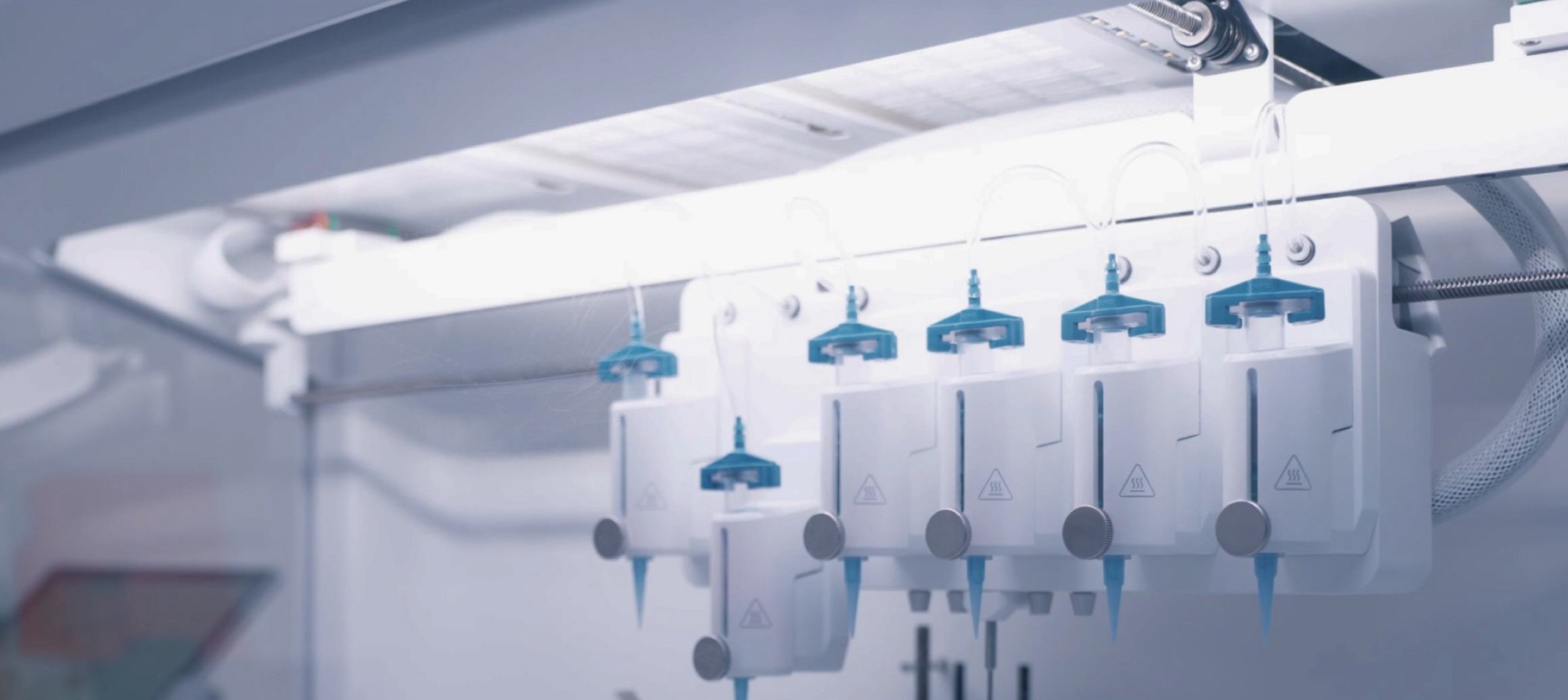
Bioprinted on the on-site CELLINK printers
On site
Constructs are printed the same day, on demand, from available cells and bioink. Printing itself takes minutes to hours. The printed tissue still needs time in culture to mature before it is used for testing.
CELLINK BIO X6
On site
Multi-printhead extrusion bioprinter. On-site equipment; not qualified or validated in this workflow, and not clinically approved. Printed constructs are research use only.
CELLINK Lumen X
On site
Step 4 · what the models are for
Organoid models and organ-on-chip
Planned
Patient-relevant models are used to test how stem-cell, NK and CAR-NK treatments behave in this person's biology, before anyone is treated. Which models to build follows the clinical or treatment question.
Organoid models
The first organoid in the plan is cardiac; its reference is held for biological sign-off.
The models the plan could build for Daniel, each read against Daniel's own results from this run on the cobas c 303: only a real change asks for one. Timelines use the 8–12 week banking window and the CellOS catalogue's differentiation days.
048121620
Hepatic organoid
Photo of a bioprinter of this kind, not the ones named here
The latest directive wins. Revoking access does not fall back to an older grant.
Data is pseudonymised under a code for each person, not anonymised: that is what lets the patient's choices follow their data.
Physical cells stay in the laboratory biobank under custody; the patient controls what they may be used for.
Erythroid progenitor expansionExpands the blood cells that are reprogrammed next.
4Sendai reprogrammingOCT4, SOX2, KLF4 and a MYC-family factor on a non-integrating vector. Kit: awaiting selection.
5Clone selectionClones are picked, expanded and screened.
6Master and working cell banksMCB and WCB with release testing; a genome comparison screens for reprogramming-induced variants.
7DifferentiationInto the tissue the question needs, from the working bank.
Steps and figures: SOP-IPSC-PROD-001 v2.1/v2.2, Prepaire’s iPSC production procedure (a controlled draft).
Where this runs
Cell banks, protocol builder and the robot deck live in CellOS.
Organoids are foetal-like: about 25–35% of adult equivalence.
The iPSC production SOP is a controlled draft, not validated for clinical use.
Automated reprogramming and differentiation are deferred on the robot: its first scope is the universal iPSC cycle.
Which models to build follows the clinical or treatment question; the genome anchors and screens the cell banks.
Source: SOP-IPSC-PROD-001 v2.1/v2.2, Prepaire’s iPSC production procedure (a controlled draft).
Light-based (DLP) bioprinter. On-site equipment; not qualified or validated in this workflow, and not clinically approved. Printed constructs are research use only.
A patient-specific print needs the patient's own cells: from route 1, or primary cells. Until then a print uses available cells and shows how a tissue behaves, not how this patient's tissue behaves.
1Cells and bioinkFrom cells already available. A patient-specific print needs the patient's own cells, from the iPSC route or primary cells.
2PrintPrinted the same day, on demand. Printing itself takes minutes to hours.
3Maturation in culturePrinted tissue still needs time in culture to mature before it is used for testing.
The twin informs and de-risks a therapy; it is not itself the therapy. A patient-derived model is not the source of an off-the-shelf treatment.
Cardiac organoid
Kidney organoid
Printed liver tissue construct
Printed day 0, then matured in culture
Cardiac organ-on-chip
Cortical organoid
Weeks from the consented blood draw Reprogramming to banks (8 weeks minimum) Up to 12 weeks with release testing Earliest test-ready window
Route 1 · iPSCOn hold · nothing in Daniel's results asks for it
Hepatic organoid
How a liver model handles lipid-related compounds. Daniel's 10 liver and lipid results today hold no real change (10 still being learned), so nothing asks for a liver model yet.
Readouts: Albumin, CYP, injury
Timeline: About 10–16 weeks from the blood draw: 8–12 weeks to release-tested banks, then 18–24 days of differentiation.
Research use only. No clinical claim.
Route 1 · iPSCPlanned
Cardiac organoid
Cardiac safety screening for candidate treatments. The first organoid in the plan; its reference is held for biological sign-off.
Readouts: Beat rate, calcium, injury
Timeline: About 11–17 weeks from the blood draw: 8–12 weeks to release-tested banks, then 21–30 days of differentiation.
Research use only. No clinical claim.
Route 1 · iPSCOn hold · nothing in Daniel's results asks for it
Kidney organoid
Renal toxicity screening. Daniel's 3 kidney results today hold no real change (3 still being learned), so nothing asks for a kidney model yet.
Readouts: Nephron markers, toxicity
Timeline: About 10–16 weeks from the blood draw: 8–12 weeks to release-tested banks, then 18–25 days of differentiation.
Research use only. No clinical claim.
Route 2 · printedPossible print plan
Printed liver tissue construct
A fast first look at compound handling in printed liver tissue, before the patient's own banked cells are ready.
Readouts: Viability, albumin, injury markers
Timeline: Printed the same day on the BIO X6 from available cells and bioink; then time in culture to mature before testing. Patient-specific only once the patient's own cells exist.
Research use only. No clinical claim.
Organ-on-chipPlanned
Cardiac organ-on-chip
Treatment response under flow, once the cardiac organoid is ready.
Readouts: Force, rhythm, LDH
Timeline: About 11–17 weeks from the blood draw: the cardiac organoid timeline plus about 3 days to load the chip.
Research use only. No clinical claim.
Route 1 · iPSCOn hold · nothing in Daniel's results asks for it
Cortical organoid
Neural safety and activity readouts. No test in this run on the cobas c 303 is read for the brain, so nothing asks for a neural model.
Readouts: Layer markers, activity
Timeline: About 12–21 weeks from the blood draw: 8–12 weeks to release-tested banks, then 30–60 days of differentiation.